

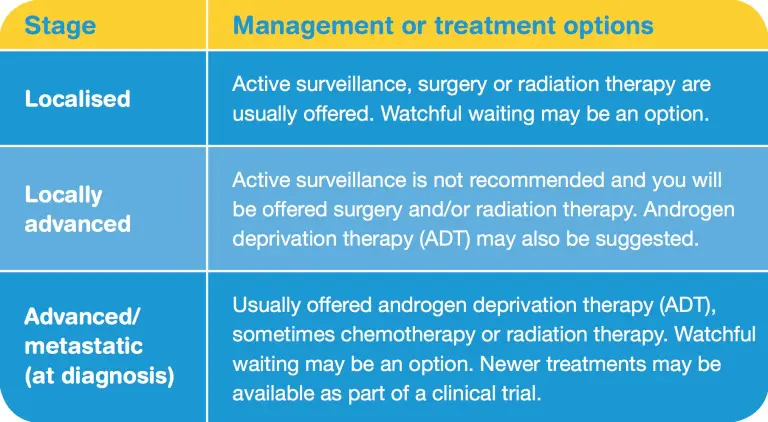
Thanks to screening and early detection, many prostate cancers are first detected long before they pose a threat. Indeed, many of the cancers detected by PSA tests and biopsies prove to be very early cancers or so slow-growing that they never pose a life-threatening danger. Because of early diagnosis, the best approach for a growing number of men is to monitor the cancer for signs that it is getting worse. Called active surveillance or “watchful waiting,” this strategy allows men with early-stage or very slow-growing prostate cancer to avoid treatment and its side effects or actively monitor the disease and take action if the cancer grows or spreads.
A considerable percentage of patients at Wrexham are offered external beam radiation treatment at Glan Clwyd Hospital. It targets prostate cancer with high-energy X-rays delivered from outside the body. It is one of the main treatment options for prostate cancer confined to a small area. External beam radiation treatment typically consists of treatments five days a week over a period of four weeks.
One of the latest and most successful treatment types is a technique called HIFU Focal Therapy. It is an effective, non-invasive set of treatments for men with early-stage localised prostate cancer. It has been pioneered and advanced in the UK by clinicians committed to offering men precision treatment options that effectively control their cancer and preserve their quality of life. We have three of our members who have achieved tremendous success through HIFU.
Several of our group members have achieved successful results through a technique called brachytherapy. Radioactive seed implants deliver radiation via tiny radioactive metal pellets or “seeds” that are implanted into the prostate gland, where they release low doses of radiation over a period of several months. Toward the end of the year, the pellets lose their radioactivity. The procedure is performed under general anaesthetic and typically takes an hour or two. Between 40 and 150 seeds are usually implanted, each about the size of a grain of rice.
Hormonal therapy on its own for early and locally advanced prostate cancer is commonly used. If your doctors are using the watchful waiting approach and the cancer starts to grow, you may have hormonal therapy on its own. Some men with early prostate cancer decide to have hormonal therapy instead of surgery or radiotherapy. Hormonal therapy on its own, though, will not get rid of all the cancer cells. Doctors do not usually advise this, but it may be suitable for you as hormonal therapy can slow down or stop the cancer cells growing for many years.
It is still recognised that surgery can offer significant treatment benefits. There are varying approaches such as open radical retropubic prostatectomy, which involves removing the prostate through a cut made in the lower abdomen. This technique allows surgeons to remove not only the prostate but also any nearby lymph nodes that may have become cancerous. Nerve-sparing techniques are now widely used to preserve urinary control and sexual function. The operation typically requires two or three days in hospital. Most men need a urinary catheter in place for one or two weeks after the surgery. For cancers confined to the prostate, radical prostatectomy remains one of the most effective ways to remove cancer.
Robot-assisted radical prostatectomy is performed through “keyhole” cuts in the lower abdomen. Manipulating robot-like fingers that pass through these cuts, surgeons can remove the diseased prostate with minimal disturbance to healthy surrounding tissue. This approach provides a shorter hospital stay and faster recovery time from surgery. Invariably, due to the lack of resource and availability of facilities in Wales and the North West, most patients have been treated at University College Hospital in London. It might be a daunting proposition but it is considered to be one of the best, if not the best, in Europe.
Laparoscopic prostatectomy involves making four or five very small cuts—about half an inch each in the abdomen. The surgeon inserts tiny cameras and surgical tools through the cuts to remove the cancerous tissue.